CAREERS IN THE SUBSEA INDUSTRY
CREATE A NEW FUTURE IN THE SUBSEA SECTOR

It’s a big step, and one that requires total commitment, but the returns can be substantial and subsea work can offer an exciting and rewarding career.
It’s a career that can take you to all four corners of the world – working in locations as diverse as the North Sea, the Gulf of Mexico or the Indian Ocean. On the other hand divers and ROV pilots may work closer to home if they choose to focus on inshore work
The oil and gas industry is the single largest employer in the subsea sector. A record number of oil and gas licences were granted last year generating increased investment and exploration. This in turn has created greater demand for offshore personnel including divers, ROV pilots and Life Support Technicians (LSTs). The industry is currently very buoyant and there are good job opportunities. This a good time to break into the subsea industry.
Click on an option below to find out more about a different subsea careers:
REMOTELY OPERATED VEHICLE PILOT
ASSISTANT LIFE SUPPORT TECHNICIAN
DIVING
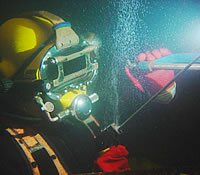
At the moment there is a world-wide shortage of divers, so if diving is the career you want to go for this is a great time to break into the industry. With expansion in the oil and gas sector and new developments such as offshore wind-farms there is a high demand for divers. Up for an adventure? This can be a tough job physically and emotionally, but for those who want a challenge, commercial diving can be an exciting and very rewarding career.
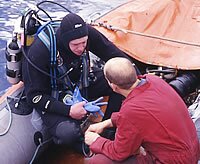
At the start of their careers many divers will build initial experience with inshore diving work before making the move to better paid jobs offshore. Many divers start with civil engineering jobs, working on harbours, dams and inland waterways. There are also opportunities in areas such as the media, scientific and archaeological diving, inshore construction and scallop diving.
Getting your first job will be hardest as you will still need to gain work experience, and the more vocational skills you have to offer employers, the easier it is to get your foot on the first rung of the ladder. At The Underwater Centre we do offer key career packages with industry skills training, check out our courses section to find out more about this.
Pay rates can begin at £120 p/d when you first start for unskilled work and go up to £1000 and higher for skilled mixed gas divers working offshore. After gaining sufficient experience as an air diver you can return to complete Closed Bell training and become a saturation diver.
To find out more about diver training options click here.
ROV
Remotely Operated Vehicles (ROVs) are at the cutting edge of the subsea industry, with advanced equipment at forefront of technology. Technological development has expanded the use of ROVs, as they become increasingly capable and also more affordable. This is a growing sector and there are excellent job opportunities. We are frequently approached by recruitment agencies looking to take on new pilot technicians.
The main employer is still the oil and gas industry but they are increasingly used in civil engineering work inshore, also defence sector where ROVs are used for detection, mine hunting and vessel protection. As ROVs have become more affordable they have begun to be used in the environmental sciences with scientific exploration, marine archaeology and environmental monitoring work. Civil and environmental work tends to be more stable, but offshore work with the oil and gas industry has higher earning potential.
Pay rates range from £175 - £450 per day depending upon qualifications and experience. Newly qualified ROV Pilots will normally start as a base technician before moving offshore to work with a small ROV or as part of a team operating larger ROV. Starting as a junior ROV technician you can work your way up to offshore party chief. This can take from three to five years.
At The Underwater Centre our training meets industry body IMCA standards, and students gain vital hands-on flying experience in open sea water. To find out about ROV courses click here.
ALST & LST
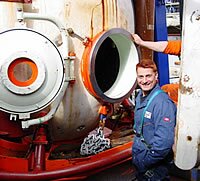
Life Support Technicians (LSTs) carry out the vital role of making sure that divers working in saturation systems are operating in safe living conditions. Whilst living in saturation divers need constant monitoring. Trained technicians outside the decompression chamber monitor divers’ conditions within the chamber. LSTs control oxygen content of breathing gas, the concentration or carbon dioxide in the atmosphere, pressure, temperature and humidity of the environment.
This is a vital and very responsible role. If you are looking for a new career but don’t want to get your feet wet, this could be the job for you. You would start your career as an Assistant Life Support Technician (ALST) then after gaining sufficient experience you can progress to LST and ultimately Life Support Supervisor. Pay rates start at £180 p/d for a newly qualified ALST and go up to £500 p/d for a fully qualified Life Support Supervisor.
Training for ALST work covers physics, physiology and medical issues. Check out our ALST courses, with on site experience with mixed gas divers in decompression, click here.